
Sample “Challenge” critiques of political communications
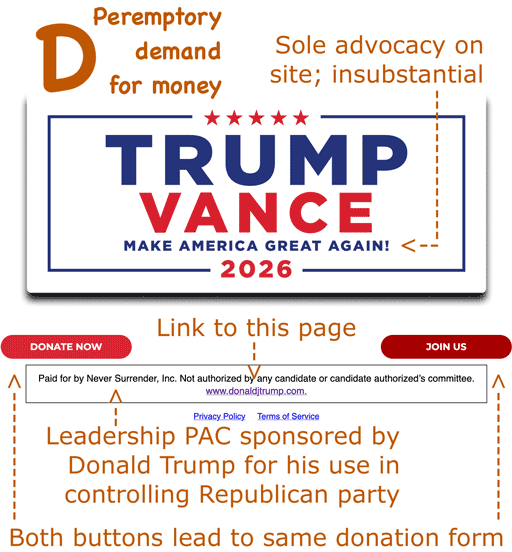
D–donaldjtrump.com, accessed 2026-03-25, consists of a single page with the above image as its sole content. In addition to linking itself and two pages of detailed legalese, the “Donate Now” and “Join Us” buttons both lead to the same page on another website requesting political contributions.
The striking thing about this page is its complete lack of substance; it essentially consists of a slogan and a plea for money. Although experience may lead me to re-calibrate my grading system over time, for now I’m setting “D” as the grade for simple requests for money. Since my point here is to critique weak political arguments, I’d initially imagined giving an “F” to pitches that I evaluated as a big nothing; but the second site I looked at (see second half of this post) convinced me I needed an even lower score for sites that in my opinion were entirely, or on balance, misleading and deceptive.
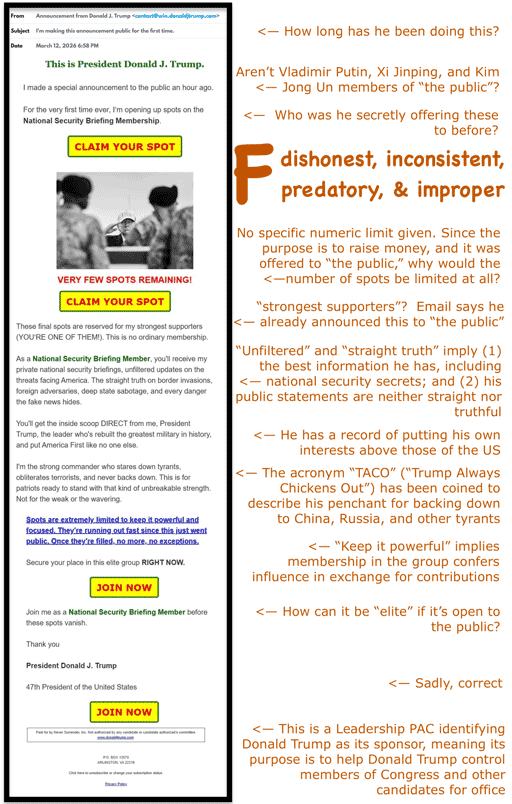
F–politicalemails.org/messages/2167888, accessed 2026-03-25, is identified by the Archive of Political Emails as an email sent from a donaldjtrump.com domain email account purporting to be that of President Trump, offering exclusive national security briefings to donors. As I expect will be my usual practice, my focus is on evaluating the document as I find it on the web at the time of the analysis, taking it on its own terms (i.e., asking questions and expressing concerns applicable if the document is from the purported author with the purpose(s) expressed by such author within it).
This one is appalling and contemptible, reminding me of the worst scams perpetrated against the elderly or otherwise vulnerable. The statements within it are dishonest (e.g., contrary to publicly evident facts), inconsistent (e.g., with one another), improper (e.g., strongly suggesting donations will entitle someone to illegal access to nonpublic information of the US government with national security implications), and predatory (e.g., so implausible on their face they would seem to be targeted at particularly vulnerable recipients).